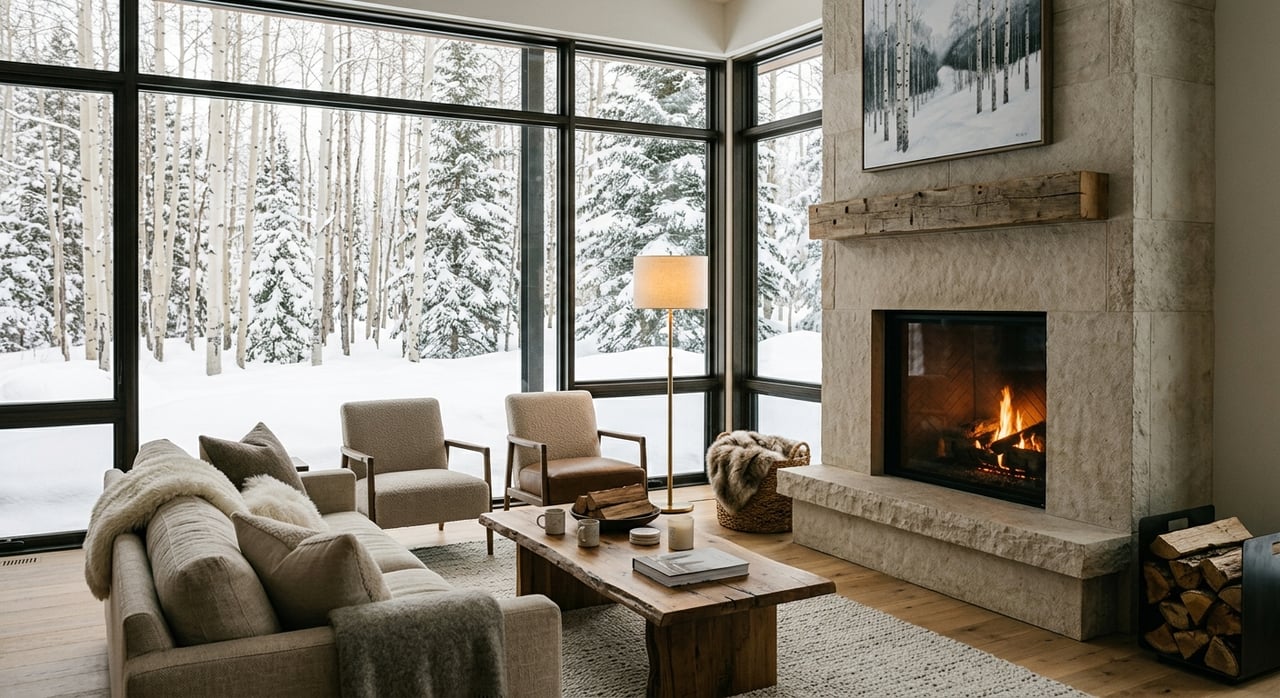
Considering Aspen’s East End For Your Next Home
June 11, 2026
June 11, 2026
If you are drawn to Aspen but want more breathing room than the downtown core often offers, the East End deserves a serious look. This is one of those neighborhoods where small differences in view, privacy, and parcel position can have a major impact on both lifestyle and value. If you are weighing whether East End fits your next purchase, this guide will help you understand pricing, housing options, daily livability, and the due diligence that matters most. Let’s dive in.
Aspen’s East End is best understood as an in-town luxury micro-market on the east side of Aspen. Current inventory is concentrated along corridors such as Midland, Mountain Laurel, Roaring Fork, Riverside, Hyman, and Highway 82 near North Star Preserve. That tight footprint helps explain why inventory can feel limited, even when the neighborhood offers a wide range of home types.
The pricing tells an important story. Realtor.com’s April 2026 snapshot shows a median listing price of $14.45 million, with 20 homes for sale, 55 rentals, a median rent of $54,500 per month, and a median 98 days on market. In Aspen terms, that places East End much closer to the luxury tier of the West End and Red Mountain than to the more condo-driven downtown median.
One of the biggest mistakes buyers make is assuming East End has a single price point. It does not. Current active inventory suggests a market where pricing is driven by a mix of lot quality, views, finish level, and privacy, not just square footage.
Based on current listings, a helpful framework looks like this:
Recent examples show just how broad that spread can be, from a roughly $3.25 million Park Avenue condo or duplex-style option to larger estates listed up to about $32.5 million. For you as a buyer, that means East End can work for very different ownership goals, but only if you define your priorities clearly before you start touring.
East End is not a neighborhood of one architectural era or one condition profile. Current listings include homes dating to 1959, 1970, 2013, and 2020, which means you may see original-condition properties, remodel opportunities, and fully turnkey luxury homes in the same search.
That variety can be a real advantage. If you want immediate use with minimal work, there are polished, move-in-ready options. If you want to personalize a property over time, there may be homes with a compelling location and a value-add story.
For buyers who think strategically, this mixed inventory is part of East End’s appeal. You are not only shopping for a finished home. In some cases, you are also shopping for future potential, provided the parcel and city rules support your plans.
In East End, views are not just a bonus. They are often central to pricing and resale strength. Current listings highlight outlooks toward Aspen Mountain, Independence Pass, the Roaring Fork River, and North Star Preserve.
Orientation matters a great deal. East-facing or higher parcels tend to capture broader mountain and pass views, and those visual advantages can separate one property from another even when home size appears similar on paper. That is why two homes with comparable square footage can sit in very different value categories.
If views matter to you, it helps to look beyond listing photos. Pay attention to how the home sits on the parcel, where the main living spaces face, and how much of the outlook is protected by topography or surrounding homes. In a micro-market like East End, these details matter.
One of East End’s clearest lifestyle advantages is its relationship to the natural landscape. North Star Nature Preserve is a defining neighborhood asset, offering a quieter and more nature-oriented setting than many buyers expect this close to central Aspen.
According to Pitkin County, the preserve spans 245 acres and is bordered by the East of Aspen Trail. It includes a loop trail, river access, and winter Nordic use. The preserve also has rules that buyers should know, including no dogs on the preserve and closure from dusk to dawn.
For many buyers, this is the difference-maker. If you want close-in access to trails, river scenery, and open space without giving up in-town convenience, East End presents a compelling balance.
East End is not the same as living in Aspen’s downtown pedestrian core, but it can still support a car-light lifestyle. The City of Aspen highlights free shuttles, WE-cycle bike share, and The Downtowner door-to-door service as part of local transportation options.
City transportation materials also note that 13.7% of Aspen residents walk to work and that Aspen has lower drive-alone commuting than many nearby communities. That does not mean every East End owner will live car-free. It does mean that daily mobility can be easier than many second-home buyers initially assume.
The broader trail and transit system adds to that flexibility. The City of Aspen says the Rio Grande Trail runs 42 miles between Aspen and Glenwood Springs, and local trail connections extend toward Snowmass Village, Woody Creek, and Basalt. RFTA also provides commuter service, ski shuttle service to the Aspen Snowmass mountains, and seasonal Maroon Bells shuttle service via Aspen Highlands.
If you are comparing East End with the downtown core, the real question is usually convenience versus space. The center of Aspen is the town’s pedestrian hub, where many buyers trade square footage for immediate access to shopping, dining, and the base-area energy around Aspen Mountain.
East End offers a different rhythm. It tends to feel more house-oriented and better suited to buyers who prioritize privacy, garages, yard utility, and broader views over being steps from restaurants or the gondola. Neither choice is better in a universal sense. It depends on how you plan to live in the property.
For some buyers, East End becomes the better long-term fit because it delivers a stronger feeling of retreat while keeping town close at hand. That balance is hard to replicate in tighter, more central locations.
East End also deserves a different comparison with the West End. While both sit in Aspen’s luxury tier, they often appeal to buyers for different reasons.
The West End is still defined by Victorian homes, miners’ cabins, and preservation protections. East End can feel more contemporary and less tied to historic fabric, which may matter if you are looking for a modern design, a more flexible remodel path, or a rebuild story with fewer historic constraints.
That does not mean East End is automatically simple from a planning standpoint. It means the neighborhood often attracts buyers who want to explore modernization or renovation potential in a way that may be harder on certain West End parcels.
If you are considering a remodel candidate, parcel-specific research is essential. The City of Aspen’s Historic Preservation materials state that individually designated properties and properties in historic districts are subject to design standards, and city planning guidance notes that some exterior work and even some interior work may require review before work begins.
That is why listing photos should never be your only guide. Before assuming a property can be expanded, redesigned, or reconfigured, you will want to verify zoning, historic status, and land-use constraints through Aspen’s planning resources and Map Aspen.
This is where experienced local guidance becomes valuable. In East End, upside often comes from seeing what a property could become, but only after confirming what is actually feasible.
For buyer-owners who are thinking about seasonal use and income potential, rental rules should be part of the conversation from day one. Aspen requires permits for rentals under 30 days, and permit type, rental-night limits, and caps depend on residency and zone district.
The city also directs owners to its short-term rental map to determine eligibility. In practical terms, that means your purchase decision and your rental strategy should be evaluated together, not separately. A home that fits your lifestyle beautifully may have very different rental potential than you expect, depending on its zone and permit path.
For investor-minded buyers, this is especially important in East End. The neighborhood’s value can be shaped by both personal enjoyment and seasonal monetization, so a careful review upfront can help you make a smarter hold decision.
East End is best viewed as a micro-market where buyers are often paying for view, privacy, location, and the ability to tailor or reimagine a home. Square footage still matters, of course, but it is rarely the full story here.
Based on current inventory and pricing dispersion, well-located homes that are move-in ready and offer strong views plus practical parking or garage space are often the easiest to defend on resale. That is not a fixed rule, but it is a useful lens if you are trying to separate emotional appeal from lasting market strength.
When you evaluate East End through that lens, the neighborhood becomes easier to understand. You are not just choosing a home. You are choosing a particular version of Aspen living, and the details of that choice can matter for years.
If you are considering Aspen’s East End, the right opportunity is rarely just about what is currently listed. It is about matching your lifestyle goals, your privacy preferences, and your long-term ownership strategy with the right parcel, view orientation, and use potential. If you want a thoughtful, highly local perspective on buying, renting, or evaluating renovation possibilities in East End, connect with Lisa Turchiarelli.

Lisa Turchiarelli is a trusted Aspen real estate advisor with more than 28 years of experience in luxury sales and rentals. A Top Producer at Coldwell Banker Mason Morse and a recipient of the prestigious International Society of Excellence Award, Lisa is recognized among the top 0.5% of Coldwell Banker agents worldwide. Known for her determination, deep market knowledge, and ability to guide clients through every stage of the buying, selling, or investment process, she works tirelessly to help clients find properties that fit their goals perfectly. When she isn’t serving clients, Lisa enjoys embracing the Aspen lifestyle with her family, whether hiking, skiing, or volunteering in her community.
📍 355 Riverside Ave, Westport, CT 06880
📞 (203) 858-2095


Stay up to date on the latest real estate trends.
What to Understand Before You Make an Offer.

What Aspen-Area Sellers Should Understand Before Closing.

Understanding Your Options Beyond Aspen City Limits.

Why Buyers Pay a Premium for a South-Facing Hillside Minutes From Downtown Aspen.

What Location, Building Age, and Association Rules Mean for Your Downtown Aspen Purchase.
Reading Past the Headlines: How Aspen's Ultra-Luxury Tier Impacts the Numbers You'll See.
Understanding What Makes Each Corner of Aspen Feel Different.

Meeting the 45-Day Deadline in a Thin Market Like Aspen and the Roaring Fork Valley.
When not helping clients realize their dreams Lisa lives her own by hiking, mountain biking, running and telemark skiing in the natural beauty of the Aspen area. Get in touch with her today!