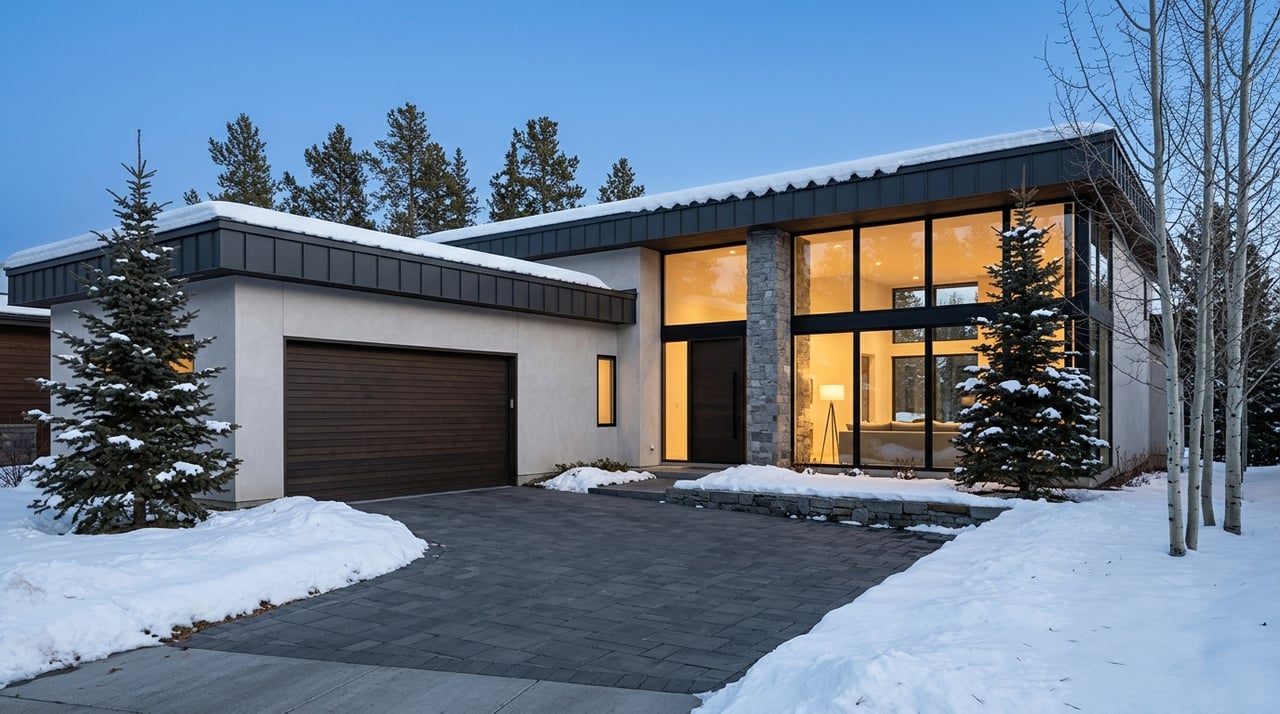
Life On Red Mountain: Aspen’s Ultimate View Estates
May 14, 2026
May 14, 2026
If you picture Aspen living as a blend of privacy, drama, and effortless access to town, Red Mountain likely comes to mind first. Perched on Aspen’s north side above downtown, this hillside enclave has long stood apart for its elevated setting, expansive outlooks, and quiet sense of arrival. If you are considering a home here, it helps to understand what makes Red Mountain so distinct, from its geography to its architecture to the practical details that shape ownership. Let’s dive in.
Red Mountain sits above downtown Aspen on the north side, with an elevated position that helps create its well-known overlook character. Aspen’s geographic profile places Red Mountain north of town, with Smuggler Mountain to the east and Aspen Mountain to the south, which helps explain why so many homes are oriented toward sweeping mountain and town views.
Just as important, Red Mountain is close to downtown without feeling central in the everyday sense. Local coverage describes it as only a few minutes’ drive from town, which makes it appealing if you want privacy and a strong residential feel without giving up easy access to dining, shopping, skiing, and cultural events.
The area also benefits from Aspen’s long-running planning philosophy. The Aspen Area Community Plan emphasizes preserving scenic settings, managing development impacts, and maintaining the urban growth boundary. For you as a buyer or owner, that broader framework helps explain why views, setting, and topography carry such lasting value here.
In Red Mountain, the setting is not just a backdrop. It is often the defining feature of the property. The neighborhood’s hillside placement gives many homes a strong visual connection to Aspen Mountain, downtown Aspen, and the surrounding ridgelines.
That creates a different experience from living on the valley floor. You may still be near the center of Aspen life, but your daily rhythm can feel more removed, more private, and more focused on the landscape. For many luxury buyers, that combination is exactly the point.
This is also part of why Red Mountain remains consistently desirable in the broader Aspen market. The neighborhood pairs geography with prestige, and that mix is hard to replicate. When buyers want both proximity and a strong sense of retreat, Red Mountain naturally stays on the shortlist.
One of the most interesting things about Red Mountain is that it does not follow a single architectural formula. Legacy homes and substantial rebuilds coexist, which gives the neighborhood a broad design range rather than one uniform style.
Aspen’s landmark inventory includes 120 Red Mountain Road, and the city’s historic-preservation design guidance uses that same address as an example of a modern chalet. The city describes features such as a rectilinear footprint, broad gabled façade, low-to-moderate pitched roof, large glazed areas, minimal decoration, and an orientation toward Aspen Mountain.
That example is useful because it reflects a larger point about the neighborhood. On Red Mountain, architecture often responds directly to the site. You will commonly see homes designed to frame views, capture light, and create strong indoor-outdoor connections, whether the style leans more alpine, contemporary, or somewhere in between.
If you are looking at a property with renovation or redevelopment potential, Red Mountain calls for careful due diligence. One reason is jurisdiction. The Aspen Area Community Plan notes that some of Red Mountain is in unincorporated Pitkin County rather than the City of Aspen, so the permit path can vary depending on the parcel.
Aspen Planning and Zoning is the starting point for development questions within the city, and the city’s planning materials note that the zoning map includes a Mountain View Plane layer. If a property is individually designated or located in a historic district, historic-preservation requirements may also apply.
In practical terms, you should verify the parcel’s governing jurisdiction before making assumptions about review timelines or development options. This matters whether you are evaluating a teardown, a major remodel, or a design-forward update intended to improve long-term value.
Wildfire resilience is now another important part of the conversation. Aspen and Pitkin County both adopted the Colorado Wildfire Resiliency Code in March 2026. In the City of Aspen, the code took effect on April 23, 2026, and in Pitkin County it applies to building permit applications submitted on or after May 2, 2026.
For buyers of land, older homes, or estates with planned improvements, that makes early planning even more important. It is wise to view design, permitting, and resilience standards as connected pieces of the same strategy.
Red Mountain’s appeal is not limited to one season, even though Aspen is famous for winter. Living here means you are close to the experiences that define Aspen all year, while still returning home to a setting that feels elevated and quiet.
Winter is the season most people associate with Aspen, and for good reason. Aspen Snowmass notes that Wintersköl dates to 1951 and now includes torchlight descents on Aspen Mountain, live music, bonfires, fireworks, snow sculptures, and early-season skiing across all four mountains.
Aspen Chamber also describes Aspen as renowned for its winters, with the season centered on skiing, snowboarding, and snowshoeing. From Red Mountain, you are near that energy and tradition without living in the middle of downtown activity.
In summer, the lifestyle shifts from snow to mountain access and cultural programming. Aspen Snowmass highlights gondola rides, hiking, yoga, live music, and nature programs on Aspen Mountain, along with lift-served sightseeing and bike access in the broader resort system.
For you as an owner, this means summer is not a downtime season. It is a full lifestyle season in its own right, with easy access to trails, mountain experiences, and town-based events.
Fall is one of Aspen’s signature seasons. Aspen Chamber describes sunny days, crisp cool nights, and golden aspens, while Aspen Snowmass notes that fall colors usually peak between mid-September and early October.
This is often when Red Mountain feels especially cinematic. The elevated vantage point can make seasonal color and changing light part of everyday life, not just something you seek out on a drive or hike.
Spring is Aspen’s quieter season, and that can be part of its charm. Aspen Chamber describes it as short, sweet, and the city’s quiet season.
Even then, Aspen remains active year-round with music, arts, culture, history, family events, and major draws such as the Food & Wine Classic in Aspen. If you value a calmer residential rhythm without losing access to a vibrant town calendar, Red Mountain aligns well with that balance.
In a market like Aspen, neighborhood desirability is about more than price alone. It also reflects limited transaction volume, location, topography, and long-term reputation. Red Mountain checks each of those boxes.
According to the Aspen Board of REALTORS market report for March 2026, Aspen single-family homes recorded 12 sold listings year to date, with a median sales price of $12.75 million and an average sales price of $15.22 million. The report also showed 98 homes for sale and 15.1 months of inventory, while noting that one month of activity can appear extreme because of small sample sizes.
That context matters because it shows how rare and high-value Aspen inventory remains, especially at the top end. In that environment, Red Mountain’s combination of established prestige, close-in location, and view-driven homes continues to support lasting demand.
If you are thinking like an owner as well as a buyer, this is where local nuance matters most. A home on Red Mountain may offer lifestyle value first, but site orientation, renovation potential, jurisdiction, and design path can all affect long-term performance.
Red Mountain tends to resonate with buyers who want a very specific Aspen experience. While every search is personal, a few priorities often align well with this neighborhood:
It can also be compelling if you are evaluating ownership from multiple angles. Some buyers want a personal retreat first. Others also think about land value, future improvements, or how a property may fit into a longer-term portfolio strategy.
Because Red Mountain inventory is specialized, the search process benefits from a tailored approach. What looks similar on paper can be very different in person once you account for view corridors, topography, road position, design orientation, and jurisdiction.
If you are evaluating options here, it helps to focus on a few practical questions early:
Those are the details that can shape not only your purchase decision, but also your ownership experience over time. In a neighborhood as valuable and site-sensitive as Red Mountain, informed guidance can make a meaningful difference.
Red Mountain is not simply one of Aspen’s best-known addresses. It is a neighborhood where setting, architecture, and long-term value come together in a very intentional way. If you want help evaluating estates, land, renovation opportunities, or the lifestyle fit of Red Mountain versus other Aspen enclaves, Lisa Turchiarelli offers discreet, highly personalized guidance shaped by deep local market experience.

Lisa Turchiarelli is a trusted Aspen real estate advisor with more than 28 years of experience in luxury sales and rentals. A Top Producer at Coldwell Banker Mason Morse and a recipient of the prestigious International Society of Excellence Award, Lisa is recognized among the top 0.5% of Coldwell Banker agents worldwide. Known for her determination, deep market knowledge, and ability to guide clients through every stage of the buying, selling, or investment process, she works tirelessly to help clients find properties that fit their goals perfectly. When she isn’t serving clients, Lisa enjoys embracing the Aspen lifestyle with her family, whether hiking, skiing, or volunteering in her community.
📍 355 Riverside Ave, Westport, CT 06880
📞 (203) 858-2095


Stay up to date on the latest real estate trends.

When not helping clients realize their dreams Lisa lives her own by hiking, mountain biking, running and telemark skiing in the natural beauty of the Aspen area. Get in touch with her today!