The East End's Missing Link Finally Gets Built
August 20, 2026
August 20, 2026
Walk down Ute Avenue past the trailhead parking lot and you will pass three things that most people treat as unrelated: a wooden gate leading into a historic cemetery, a small playground tucked behind it, and a black-diamond hiking trail that climbs straight up the shoulder of Aspen Mountain. Most residents know one of these well and the other two only in passing. That is about to change, in the smallest possible way, because of a gravel path that cost less than a decent kitchen remodel.
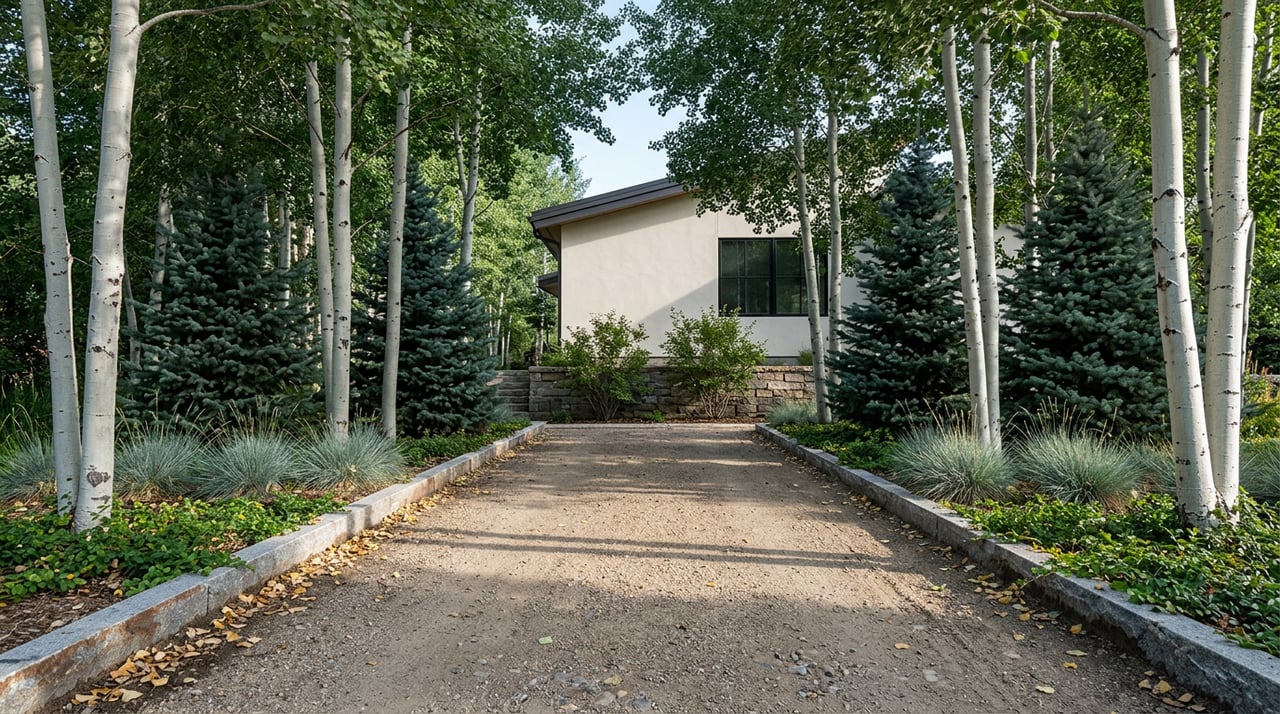
For years, the only way into Ute Park, the quiet green pocket next to Ute Cemetery, was a single-track trail or a deeply rutted double-track that made the short walk in genuinely difficult for anyone using a wheelchair, a stroller, or a cane. This summer, Aspen's Parks and Open Space department built something better: a gravel path wide and flat enough for mobility-impaired access, plus a new picnic table on a graded platform. Parks and Open Space Director Matt Kuhn told the Aspen Times the work began in June with an in-house crew, at a total cost of roughly $5,000 to $10,000.
"It's a relatively small project and we're just trying to improve accessibility and durability of the space," Kuhn said.
The target was completion by the end of July or early August. Since we are now past mid-August, that window has almost certainly closed, which means the path is likely finished or very nearly there.
The reason this small fix matters more than its price tag suggests is that Ute Park was never really its own destination. It sits inside a chain of connected ground that stretches from the base of Ute Avenue all the way to the top of Aspen Mountain. According to the local trail network mapped by Aspen Trail Finder, the corridor links the Ute Avenue trailhead, Ute Cemetery, Ute Park, Ute Trail, the Ute Rock Overlook at 9,050 feet, and the Sundeck at the top of the Silver Queen Gondola, with the winter-only Benedict Trail and the Ajax Trail branching off along the way.
That is not six separate outings. It is one piece of ground that happens to have six names, and until this summer, the least dramatic segment of it, the last few hundred feet into the park itself, was also the hardest to use if you were pushing a stroller or moving slower than a trail runner.
| Detail | Fact |
|---|---|
| Prior access | Single-track trails or a rutted double-track |
| New surface | Gravel, wide and flat |
| New amenity | Picnic table on a graded platform |
| Crew | In-house Aspen Parks and Open Space staff |
| Start date | June 2026 |
| Target completion | Late July to early August 2026 |
| Estimated cost | $5,000 to $10,000 |
There is no ribbon-cutting here, no press conference, no line item that will show up in next year's city budget as a headline project. That is precisely the point. Ute Park has existed for decades as a lightly developed natural area with a winding trail down toward the river, according to the city's own recreation department. It was never neglected exactly, just left as it was, which meant a genuinely public, accessible piece of the East End was quietly harder to reach than it needed to be.
Anyone who has walked the loop past Ute Park has almost certainly walked past Ute Cemetery too, whether they registered it or not. It is Aspen's oldest burial ground, established in 1880 when a prospector traveling with a party from Texas died of what was then called mountain fever near Red Mountain and needed somewhere to be buried. The land belonged at the time to Charles Hallam, owner of the Smuggler Mine.
Ute Cemetery earned a spot on the National Register of Historic Places in 2002, and it holds roughly 200 burials, most of them working miners, laborers, and their families rather than the mine owners and mayors buried in Aspen's two other historic cemeteries, Aspen Grove and Red Butte. Those two were laid out in formal grids for the wealthy. Ute Cemetery grew organically, without a plan, which is part of why its headstones sit at odd angles among native gambel oak, serviceberry, and sagebrush rather than in tidy rows.
It is easy to walk past a split-rail fence and a scattering of old stones without thinking much about it. It is harder to ignore once you know that the same rolling ground under your feet was chosen because a young settlement had nowhere else to put its dead, and that earning that historic listing took a two-year process funded partly by the city and a grant from History Colorado, during which volunteers cleared decades of overgrowth and professional stoneworkers restored carved headstones that vandals had damaged or sold off over the years.
If Ute Park is the mellow end of the corridor, Ute Trail is the other extreme. It climbs more than 700 feet of elevation in its first mile alone, and continues to the Sundeck at the top of Aspen Mountain for a total gain of roughly 3,000 feet. The city's own recreation department classifies it as hiking only and strongly recommends good footwear, which is the kind of understatement locals tend to appreciate.
The first stop, Ute Rock Overlook at 9,050 feet, is where most day hikers turn around, and it has become something of an informal community project in its own right. Hikers have installed a swing there, tagged online as the #aspenswingproject, giving the lookout a small human touch that no parks budget line item created. Some hikers who push on to the Sundeck skip the knee-punishing descent altogether and ride the Silver Queen Gondola back down instead, though it is worth checking Aspen Skiing Company's summer operating hours before you count on it.
The corridor does not end at the top of the mountain. It also runs the other direction, down toward the Roaring Fork River, where the East of Aspen Trail follows the water past a stretch known as Stillwater. The current here slows enough to make it a favorite spot for paddleboarding and fly fishing in the warmer months, a different kind of recreation entirely from the switchbacks up Ute Trail, but part of the same everyday geography for anyone living along this side of town.
Taken together, Ute Avenue is less a single street than a spine, with a cemetery, a park, a mountain trail, and a stretch of river all branching off it within easy walking distance of each other. Most of us experience it in fragments: a morning walk to the park with the kids, a Saturday grind up to Ute Rock, an evening paddle at Stillwater. The new gravel path does not change any of that. What it does is make the quietest, least athletic piece of the corridor usable by more of the people who live near it, which is a small but real shift in how the East End functions as a neighborhood.
None of this is a $10 million capital project. It will not appear in a ribbon-cutting photo or a city council press release beyond the single Aspen Times story that reported it. But a neighborhood's daily life is built from exactly these kinds of unremarkable fixes, the ones that decide whether a grandparent can push a stroller to a picnic table or whether a family with mixed mobility can actually use a park that has technically always been open to the public.
I have spent more than two decades watching this corner of Aspen, and the pattern holds true here as much as anywhere: the improvements that change how a place actually feels to live in rarely come with fanfare. They come with an in-house crew, a modest budget, and a target date that quietly passes while most of us are busy with something else.
If you already call the East End home, the next time you are near the Ute Avenue trailhead, it is worth the short detour into the park to see the new path for yourself. And if you are still deciding whether this corner of Aspen, with its cemetery gates, its steep trail, and its stretch of slow river, is the kind of place you want to call home, I would be glad to walk you through it in person.
Aspen Luxury Real Estate is Lisa Turchiarelli's practice, built on more than two decades of knowing Aspen's neighborhoods block by block. Let's Connect if you would like a closer look at life on this side of town.

Lisa Turchiarelli is a trusted Aspen real estate advisor with more than 28 years of experience in luxury sales and rentals. A Top Producer at Coldwell Banker Mason Morse and a recipient of the prestigious International Society of Excellence Award, Lisa is recognized among the top 0.5% of Coldwell Banker agents worldwide. Known for her determination, deep market knowledge, and ability to guide clients through every stage of the buying, selling, or investment process, she works tirelessly to help clients find properties that fit their goals perfectly. When she isn’t serving clients, Lisa enjoys embracing the Aspen lifestyle with her family, whether hiking, skiing, or volunteering in her community.
📍 355 Riverside Ave, Westport, CT 06880
📞 (203) 858-2095


Stay up to date on the latest real estate trends.
What to Understand Before You Make an Offer.

What Aspen-Area Sellers Should Understand Before Closing.
Understanding Your Options Beyond Aspen City Limits.
Why Buyers Pay a Premium for a South-Facing Hillside Minutes From Downtown Aspen.

What Location, Building Age, and Association Rules Mean for Your Downtown Aspen Purchase.

Reading Past the Headlines: How Aspen's Ultra-Luxury Tier Impacts the Numbers You'll See.
Understanding What Makes Each Corner of Aspen Feel Different.

Meeting the 45-Day Deadline in a Thin Market Like Aspen and the Roaring Fork Valley.
When not helping clients realize their dreams Lisa lives her own by hiking, mountain biking, running and telemark skiing in the natural beauty of the Aspen area. Get in touch with her today!