
Red Mountain's Priciest Homes Are Selling Space That No Longer Exists
September 10, 2026
September 10, 2026
A broker walks a buyer through a dated five-bedroom house on Red Mountain Road. The finishes are tired, the layout is choppy by contemporary standards, and the buyer's first instinct is the obvious one: tear it down, build something with the glass walls and the wellness room and the view corridors designed around today's taste. The broker stops them before they say it out loud. On most of Red Mountain, that instinct is exactly backward.
Here is the piece of the story that gets lost in most Aspen real estate coverage, including the market reports that treat Red Mountain as one more line item in a citywide luxury summary. Much of Red Mountain, including its most recognized address, Willoughby Way, sits in unincorporated Pitkin County rather than inside the City of Aspen's boundary. That distinction sounds like a technicality. It is actually the reason a 1970s or 1980s house with dated bones can be worth more standing than demolished, and it is the single fact a comparison-shopping buyer needs before making an offer on that mountainside.
Aspen and Pitkin County run two separate land use codes, and they have moved in different directions on home size over the past two decades. The city tightened its rules on large lots years ago. The county held looser limits for far longer, which is exactly why homes on Willoughby Way and elsewhere on the mountain were able to grow to 10,000, 15,000, even north of 22,000 square feet while comparable city lots stayed capped in the low five figures.
That gap closed hard in late 2023. Pitkin County commissioners voted to cut the maximum allowable home size across the unincorporated county from 15,000 square feet down to 9,250, with even tighter ceilings layered on top depending on where a parcel sits.
| Zone | Cap before late 2023 | Cap now |
|---|---|---|
| Unincorporated Pitkin County, general | 15,000 sq ft | 9,250 sq ft |
| Inside the Urban Growth Boundary | 15,000 sq ft | 8,750 sq ft |
| Environmental overlay zones | 15,000 sq ft | 5,750 sq ft |
The practical effect is immediate. Any Red Mountain home built larger than these numbers before the vote is now a legal nonconforming structure. It can stand, it can likely be maintained and updated, but it cannot be reproduced on an empty lot under today's rules. Tear it down and the replacement is bound by the new, smaller cap. The square footage that exists right now is, in a real sense, the last of its kind.
Willoughby Way is the clearest evidence of what that scarcity does to price. The strip of road running along the Roaring Fork River at the base of Red Mountain holds 46 properties with a combined assessed value topping $1.4 billion, according to the Pitkin County Assessor's Office, as reported by The Aspen Local. That single mile of road now accounts for roughly 2.1 percent of all residential real estate value in the county.
The record sale on that stretch closed in April 2024, just months after the county's size cap took effect, when 419 Willoughby Way traded for $108 million. The house runs 22,405 square feet, built in 2010, and the closing price worked out to $4,820 per square foot, setting Colorado's all-time residential sales record. The pattern held more than two years later. In June 2026, 645 Willoughby Way closed at $37 million, or $4,034 per square foot, furnished. Two sales, more than two years apart, both anchored to homes whose scale a builder could not touch today.
Anyone skimming a year-over-year comparison of Red Mountain sale prices could reach the wrong conclusion fast. The neighborhood's average sale price in 2025 came in at $22.38 million, down from $32.09 million in 2024. Read on its own, that looks like softening demand for the most expensive real estate in the state.
It is not. A single $108 million sale in 2024 pulled that year's average sharply upward, and 2025 simply lacked a transaction of equal size. Fewer ultra-estate closings changed the math, not fewer buyers wanting in. The same broader pattern shows up valley-wide through the first half of 2026, when sales above $20 million ran to 12 transactions compared with 16 over the same period in 2025, a slower pace than the prior year but still concentrated at the very top of the market. An average is a compositional artifact on a street where one closing can move the whole number. It says something about which houses changed hands in a given year. It says almost nothing about whether the underlying scarcity driving the prices has loosened.
If the size cap is the constraint, the obvious follow-up question is whether money solves it. Aspen has run a Growth Management Quota System since 1977, an annual, competitively scored allotment process that caps how much new residential square footage the region approves each year regardless of what a buyer can afford. Owners who want to build beyond their base allotment can also purchase Transferable Development Rights, essentially floor area detached from one property and sold to attach to another.
The going rate for those rights tells its own story about where space is scarce. City TDRs, each worth 250 square feet of floor area, recently sold around $725,000, up from $600,000 to $675,000 in 2024. County TDRs, each worth a much larger 2,500 square feet, have gone the opposite direction, falling from a 2022 peak near $2.5 million down to roughly $700,000 to $800,000 as of early 2026.
Run the numbers per square foot and the divergence gets sharper. A city TDR prices out to roughly $2,900 per square foot of buildable space. A county TDR, even at the high end of its current range, prices out between $280 and $320 per square foot. That is close to a tenfold gap between what it costs to add a square foot of legal floor area inside city limits versus in the county where Red Mountain sits. County development rights are comparatively cheap right now, but they still cap out at a fraction of what a legacy Willoughby Way estate already carries. Buying rights gets a new build closer to the modern ceiling. It does not get anyone back to 22,000 square feet.
None of this is a reason to avoid Red Mountain. It is a reason to treat the county's size cap as a due diligence item, not an afterthought. Confirm exactly how much of a property's existing square footage is grandfathered and get that in writing before assuming a renovation, addition, or partial rebuild preserves it. A feasibility study run before contract, not after closing, is the step that protects a buyer from discovering mid-project that a planned expansion pulls the whole structure back under current code.
It is worth keeping the city's separate rules in mind too, since the two systems get conflated constantly in casual market talk. Inside Aspen's city limits, officials cap demolition permits at six per year, plus two more reserved for residents of 35 years or longer, a scarcity mechanism aimed at slowing teardowns rather than at square footage directly. That allotment system does not govern Red Mountain's county parcels, which run on the GMQS and TDR framework described above. Confusing the two, which happens often in generic market summaries, can lead a buyer to budget for the wrong constraint entirely.
Does the size cap apply to renovations, or only new builds? The county's reduced caps target new construction and full rebuilds. An existing nonconforming structure can typically be maintained, but a land use professional should confirm before any renovation, since substantial reconstruction can trigger a review under current code.
Does this same math apply in the West End or other Aspen neighborhoods? Not in the same form. The West End sits inside city limits and its square footage is governed by the Historic Preservation Commission, which ties allowable size to lot area under its own set of rules rather than the county's GMQS and TDR system.
Is Red Mountain's demand actually cooling given the 2025 average price drop? The drop reflects which properties traded, not weaker demand. A single nine-figure sale skewed 2024's average upward, and 2025 simply had no equivalent transaction to repeat that effect.
If you are comparing Red Mountain against another Aspen address and want the entitlement history on a specific property before you write an offer, Aspen Luxury Real Estate can walk the parcel's zoning file with you and flag exactly what survives a rebuild. Let's Connect.

Lisa Turchiarelli is a trusted Aspen real estate advisor with more than 28 years of experience in luxury sales and rentals. A Top Producer at Coldwell Banker Mason Morse and a recipient of the prestigious International Society of Excellence Award, Lisa is recognized among the top 0.5% of Coldwell Banker agents worldwide. Known for her determination, deep market knowledge, and ability to guide clients through every stage of the buying, selling, or investment process, she works tirelessly to help clients find properties that fit their goals perfectly. When she isn’t serving clients, Lisa enjoys embracing the Aspen lifestyle with her family, whether hiking, skiing, or volunteering in her community.
📍 355 Riverside Ave, Westport, CT 06880
📞 (203) 858-2095


Stay up to date on the latest real estate trends.
What to Understand Before You Make an Offer.

What Aspen-Area Sellers Should Understand Before Closing.
Understanding Your Options Beyond Aspen City Limits.

Why Buyers Pay a Premium for a South-Facing Hillside Minutes From Downtown Aspen.

What Location, Building Age, and Association Rules Mean for Your Downtown Aspen Purchase.
Reading Past the Headlines: How Aspen's Ultra-Luxury Tier Impacts the Numbers You'll See.
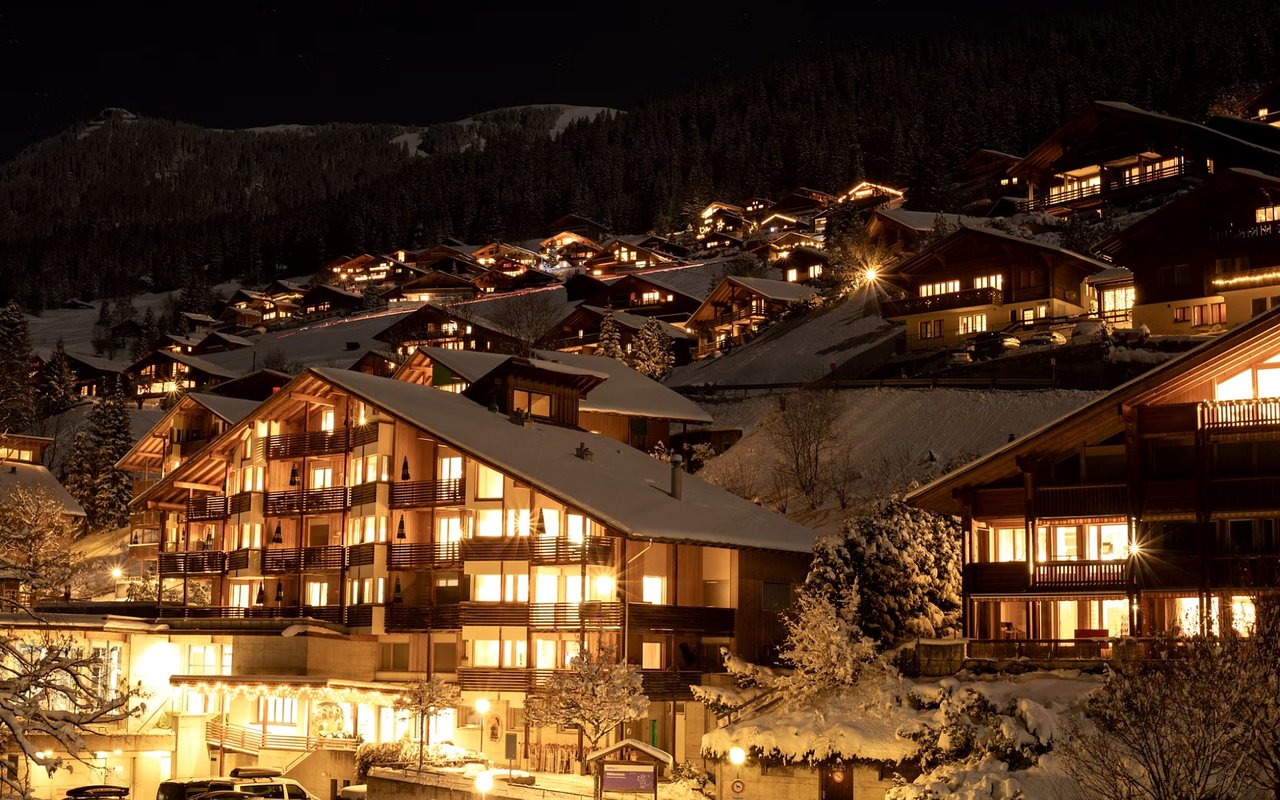
Understanding What Makes Each Corner of Aspen Feel Different.
Meeting the 45-Day Deadline in a Thin Market Like Aspen and the Roaring Fork Valley.
When not helping clients realize their dreams Lisa lives her own by hiking, mountain biking, running and telemark skiing in the natural beauty of the Aspen area. Get in touch with her today!